Dia 1 | Segunda-feira, 6 de abril
-
16:00|
Registo e boas vindas
📍Anfiteatro do Departamento de Física
Cocktail
-
18:00|
Tempo livre




Tópicos da edição de 2026
Open-Source HW and EDA | Design for AI, AI for Design | Advanced Packaging, Fan-out technologies | Amkor overview | Industrial practices and real applications | Advanced packaging and heterogeneous integration (APECS Pilot Line) | PICAdvanced photonics | Quantum Communications | Transparent electronics | Optical sensing | ...A Escola de Primavera é gratuita - não serão cobradas taxas de inscrição ou matrícula.
Junte-se a nós nesta edição da Escola de Primavera sobre Semicondutores do POEMS, uma semana introdutória destinada a estudantes de licenciatura e de ínicio de mestrado, que desejam explorar as barreiras da microeletrónica e dos semicondutores. Durante cinco dias, os participantes irão mergulhar nas áreas principais do POEMS: Design de Chips, Advanced Packaging e tecnologias emergentes.
Através de palestras, demonstrações e conversas com investigadores de renome e especialistas do setor, os alunos obterão uma visão sobre o estado da arte, os desafios industriais atuais e as últimas tendências internacionais. Com um formato dinâmico e fléxivel e sessões de feedback interativas, a escola oferece uma oportunidade única para interagir com colegas, aprender com especialistas e descobrir as possibilidades dentro da área.
📍Anfiteatro do Departamento de Física
Cocktail
📍 Anfiteatro do Departamento de Física
Apresentação e boas-vindas (João Veloso - Universidade de Aveiro)
Apresentação do POEMS (Mariana Fernandes - INL)
The electronics industry faces significant challenges, including complex supply chain dependencies on essential materials, energy-intensive processes, the growing global e-waste crisis, which exceeds 50 million tonnes annually, and the technical complexities of adopting circular design principles without compromising performance or cost-effectiveness. Attempting to integrate sustainability into this already complex scenario also introduces issues related to standards compliance and the substantial capital investments necessary for a sustainable manufacturing transition.On the other hand, developing new concepts to bring intelligence to everyday objects is very appealing in markets such as smart packaging and wearables, which include biosensors. Given that implementing intelligence in such sectors requires addressing the challenge of creating low-cost or disposable devices, it is crucial to develop new concepts when designing electronic devices for these sectors. Cost-effectiveness and functional efficiency are essential factors to consider.In this context, printed and hybrid electronics offer unique advantages for sustainability, including additive manufacturing processes that minimise material waste, compatibility with flexible and biodegradable substrates, low-temperature processing requirements, and the potential for distributed manufacturing that reduces transportation impacts. This represents a $15 billion market segment projected to reach $89 billion by 2030. (Luís Pereira - AlmaScience)
This session explores the complete journey of photonic integrated circuits from early concept to mass production, highlighting both the technological strengths and the practical limitations that shape commercialization. Key design challenges such as filtering, polarization control, and variability are discussed alongside the capabilities and trade-offs of major integration platforms, including silicon photonics, silicon nitride, thin-film lithium niobate, and emerging ferroelectric technologies. The session further examines manufacturing access, fabrication lead times, and cost barriers, and how these factors influence development cycles and business planning. Attention is also given to the critical roles of electronics co-integration, testing, qualification, packaging, and assembly in enabling scalable, high-volume production. Overall, the session provides a realistic, end-to-end view of what it takes to bring photonic integrated circuits successfully to market. (António Teixeira - PICadvanced)
Traditional semiconductor scaling reaching physical and technological limits has driven the need for increasing specialization and heterogeneity in computer system and systems-on-chip (SoC). The use of custom compute units, such as GPUs or dedicated hardware accelerators is commonplace in many domains such as machine learning (ML). At the same time, increasing heterogeneity creates challenges for designing and managing such complex systems and chips, where use of ML techniques has seen a lot of excitement and promise. In this talk, we will discuss recent trends in heterogeneous system architectures and their design, including distributed, chiplet-based architectures, near-memory computing, as well as emerging approximate and neuromorphic or brain-inspired computing paradigms to achieve high energy efficiency. We will discuss both system design for ML applications as well as use of ML for advanced system design and runtime management. In the process, we will review both traditional approaches for system-level and hardware/software co-design of computer systems, as well as state-of-the-art approaches including open challenges and opportunities. (Andreas Gerstlauer - UT Austin)
📍 Fábrica - Centro Ciência Viva - Rua dos Santos Mártires 1A
A Fábrica - Centro Ciência Viva de Aveiro tem como missão a promoção da cultura científica e tecnológica, utilizando diferentes formas de comunicação, como as exposições interativas, os espaços laboratoriais, o makerspace e os shows de ciência.
Electronic Packaging encompasses all technologies and processes that provide the physical support to the chip, establish its connections to the outside and ensures its mechanical and chemical protection. In a broader sense, Packaging bridges the gap between the micro and nanoscale of today’s chips and the functionalization scale – the human scale. As chips become more complex and demanding, its connection to the outside world faces new challenges. Thus, in recent decades, the importance of Packaging in the electronic industry has grown exponentially and today, from design to implementation, Packaging demands a truly interdisciplinary approach. This session aims provide an historical overview of Packaging, its evolutions in response to the challenges of chips, and to highlight the vital role that multidisciplinary engineering plays. (André Cardoso - INL)
Advanced packaging is the bridge between Semiconductor foundry technologies measured in Nanometers and the application PCB technologies measured in fractions of mm. As foundry technology advances further into single digits nanometers, advanced packaging technology has been required to develop to an extent which blurs the boundaries between the two. The focus of this seminar will be the manufacturing processes which enable the development of advanced packaging, it will become clear that a wide range of disciplines are required to build the bridge. (Eoin O’Toole - Amkor Technology Portugal)
Analog and mixed-signal integrated circuit design remains one of the most challenging domains in electronic design automation, characterized by highly non-linear behaviors, expensive simulations, and a strong dependence on expert knowledge. Over the past decade, artificial intelligence techniques have progressively reshaped this landscape, evolving from optimization-driven approaches to learning-based design methodologies. This talk presents a structured overview of the application of artificial intelligence to analog and RF IC design, drawing from a body of work spanning evolutionary optimization, surrogate modeling, machine learning–based synthesis, and physics-aware modeling techniques. (Nuno Lourenço – CircuitLeap)
The deployment of AI at the edge presents unique design challenges that differ fundamentally from datacenter-scale acceleration. Stringent constraints on power consumption, area, and latency shape architectural decisions from the earliest stages and propagate throughout the entire silicon development flow. This talk examines how these constraints influence the complete journey from architecture definition to physical implementation of edge AI accelerators. Drawing from practical experience in edge AI chip development, we explore key architectural trade-offs, including compute versus memory bandwidth optimisation, dataflow strategies, precision choices, and power-performance balance. The presentation bridges high-level architectural decisions with their implications on RTL design, verification methodologies, and physical implementation. Through concrete examples, we illustrate how AI-specific requirements—from handling sparse neural networks to managing diverse workload characteristics—demand adaptations in traditional chip design methodologies. The session provides insights into the multidisciplinary nature of AI accelerator design, where algorithm understanding, hardware architecture, and silicon implementation expertise must converge to enable efficient inference at the edge. (Manuel Oliveira - Axelera AI)
We will present recent advances in quantum technologies, focusing on their impact on secure communications. In particular, we discuss how progress in quantum computing may jeopardize the security of current cryptographic systems, and how quantum communication techniques, such as quantum key distribution, can be used to assure secure key exchange. We also address how these quantum cryptographic keys can support secure communication and computation services. (Armando Pinto - University of Aveiro)
Este evento surgiu pela primeira vez no Ano Internacional da Física (2005) e, desde então, realizaram-se várias edições bienais. Ao longo das várias edições tem contado com a presença de nomes da ciência no panorama nacional e internacional, proporcionando o debate de temáticas atuais. O evento tem como público-alvo, não só a comunidade académica, mas também a sociedade em geral, e tem como objetivo divulgar e promover, junto da população, uma ciência, por vezes, ainda pouco acessível, tocando em temas muitas vezes de fronteira da Física com outras áreas do conhecimento. Este ano, marca uma edição especial da celebração dos 50 anos do Departamento de Física da Universidade de Aveiro, onde todos os oradores são Alumni do departamento.
The rapid expansion of the Internet of Things (IoT), with billions of battery-powered devices deployed in environments where battery replacement is impractical or impossible, has created a critical need for radical reductions in power consumption at the silicon level. While conventional power management ICs operate transistors in strong inversion, achieving nanoampere-level quiescent currents demands a fundamentally different design philosophy: full-subthreshold operation, where all transistors work in the weak inversion region. This approach introduces significant design challenges, including increased sensitivity to process variations, reduced speed, and the need for novel circuit topologies that remain robust across wide temperature and voltage ranges. In this talk, we will walk through the complete journey of developing an ultra-low-power chip for IoT — from identifying the market opportunity and defining product specifications, through the circuit-level innovations required to achieve reliable subthreshold operation, to silicon validation and the path toward commercialization. Using the development of Nanopower Semiconductor's nPZero power supervisor IC as a case study, we will discuss the key technical decisions at each stage of the design cycle, including architecture trade-offs, layout considerations specific to ultra-low-power analog design, and the iterative process of test chip tapeouts leading to a full mask production run. We will also address the broader context of building an IC design team and product development capability within Portugal's growing semiconductor ecosystem, offering a practitioner's perspective on how academic foundations in microelectronics translate into real-world chip development. (Américo Dias - Nanopower Semiconductor)
The IEEE HART initiative aims to address the limited student access to the design, fabrication, and testing of integrated circuits at universities. There is a clear need for structured training in Integrated Circuit Design and affordable access to fabrication shuttles (MPW). The main objective of the initiative is to provide motivated students with facilitated access to chip fabrication, accompanied by specialized mentorship, enabling them to gain hands-on experience across the full cycle of design, implementation, and testing of integrated circuits. (Pedro Rito - University of Aveiro)
The APECS pilot line is a European initiative under the EU Chips Act that aims to accelerate innovation in advanced packaging and chiplet-based integration. This talk introduces the mission and capabilities of APECS, including key technologies such as 2.5D/3D integration, chiplet-based design and advanced assembly. Selected demonstrator projects will highlight real-world applications across domains such as telecommunications, AI, and sensing. The talk will also explore opportunities for students and researchers, including access to cutting-edge infrastructure, collaboration within a European ecosystem, and participation in innovative projects at the forefront of semiconductor technologies. (Ricardo Ferreira - INL)
For decades, custom silicon design was the privilege of a few, guarded by prohibitive licensing costs and non-disclosure agreements. This lecture explores the paradigm shift enabled by the convergence of three critical pillars: open-source processor design IP with RISC-V, open-source EDA toolchains, and open-source manufacturing. In this session, we will demystify the complete “RTL to GDSII" flow. Attendees will be guided through the lifecycle of a digital chip, starting with the architectural flexibility of open-source RISC-V cores. We will demonstrate how modern open-source tools handle synthesis, floorplanning, placement, routing, and signoff—all without proprietary software. The session concludes with a case study of a successful tapeout, proving that you can design and manufacture an open-source system-on-chip easily. (Stefan Wallentowitz - Munich University of Applied Sciences)
Since the isolation of graphene just over two decades ago, two-dimensional (2D) materials have evolved from a scientific curiosity into a major research frontier in physics, materials science, and engineering. This talk reviews the rapid development of graphene and related 2D materials, highlighting their exceptional properties. We discuss how the field has expanded beyond graphene to include semiconducting and insulating monolayers, enabling novel device concepts in electronics, photonics, sensing, and energy technologies. Finally, we outline current challenges and emerging opportunities that may define the next decade of 2D material research and applications. (Alexandre Carvalho - University of Aveiro)
Local de observação e ponto de encontro: Junto à entrada norte do Departamento de Física (no passeio do lado do estacionamento).
Photonic assembly and packaging are complex, multi-disciplinary processes that play a vital role in ensuring the correct functioning, reliability, and commercial viability of photonic integrated circuits. This talk will present and discuss PIC design considerations and practical experiences that enable the successful delivery of a functional demonstrator or prototype device, while maintaining compatibility with future large-scale manufacturing. (Karol Obara - PHIX Photonics Assembly)
Brainstorming (todos os participantes)
Anúncio da edição 2027 da Escola POEMS
Encerramento (Artur Silva - Universidade de Aveiro)

Receção de boas-vindas e sessão de networking
Noite de Astronomia : Esta sessão foca-se na observação de objetos de céu profundo através de telescópios digitais e numa visão detalhada do nosso sistema solar com telescópios convencionais. O evento inclui um "passeio pelo céu" para explorar as principais constelações da noite e a mitologia por trás delas. Ao aprender a navegar pelas estrelas, será capaz de identificar os pontos cardeais, planetas e nebulosas — e até avistar a olho nu satélites ou a Estação Espacial Internacional (ISS) a passar sobre as nossas cabeças. Esta atividade é dinamizada pela FISUA – Associação de Física da Universidade de Aveiro.
Horizontes da Física : Lançado no Ano Internacional da Física (2005), este evento bienal reúne cientistas de renome nacional e internacional para debater os temas mais prementes da área. Desenhado tanto para a comunidade académica como para a sociedade em geral, a sua missão é tornar a Física acessível e explorar as fronteiras onde esta se cruza com outras áreas do conhecimento. Esta edição especial celebra os 50 anos do Departamento de Física da Universidade de Aveiro, com um painel de oradores composto exclusivamente por alumni do departamento.
Física Viva : Espetáculo de ciência em que o público é convidado a experimentar as aplicações da Física. Com base num discurso simples, é possível aliar rigor científico a momentos lúdicos de imaginação e criatividade, aliciando o público para uma intervenção ativa. O espetáculo inicia-se com uma apresentação de luz laser e cor, e percorre vários ramos da Física, como Ondas, Mecânica, Termodinâmica e Eletromagnetismo.

Alexandre Carvalho
Universidade de Aveiro

Américo Dias
Nanopower Semiconductor

André Cardoso
INL

Andreas Gerstlauer
UT Austin

António Teixeira
PICadvanced

Armando Pinto
University of Aveiro

Eoin O'Toole
Amkor Technology Portugal

Karol Obara
PHIX Photonics Assembly

Luís Pereira
AlmaScience

Manuel Oliveira
Axelera AI

Nuno Lourenço
CircuitLeap

Pedro Rito
Universidade de Aveiro

Ricardo Ferreira
INL

Stefan Wallentowitz
Munich University of Applied Sciences
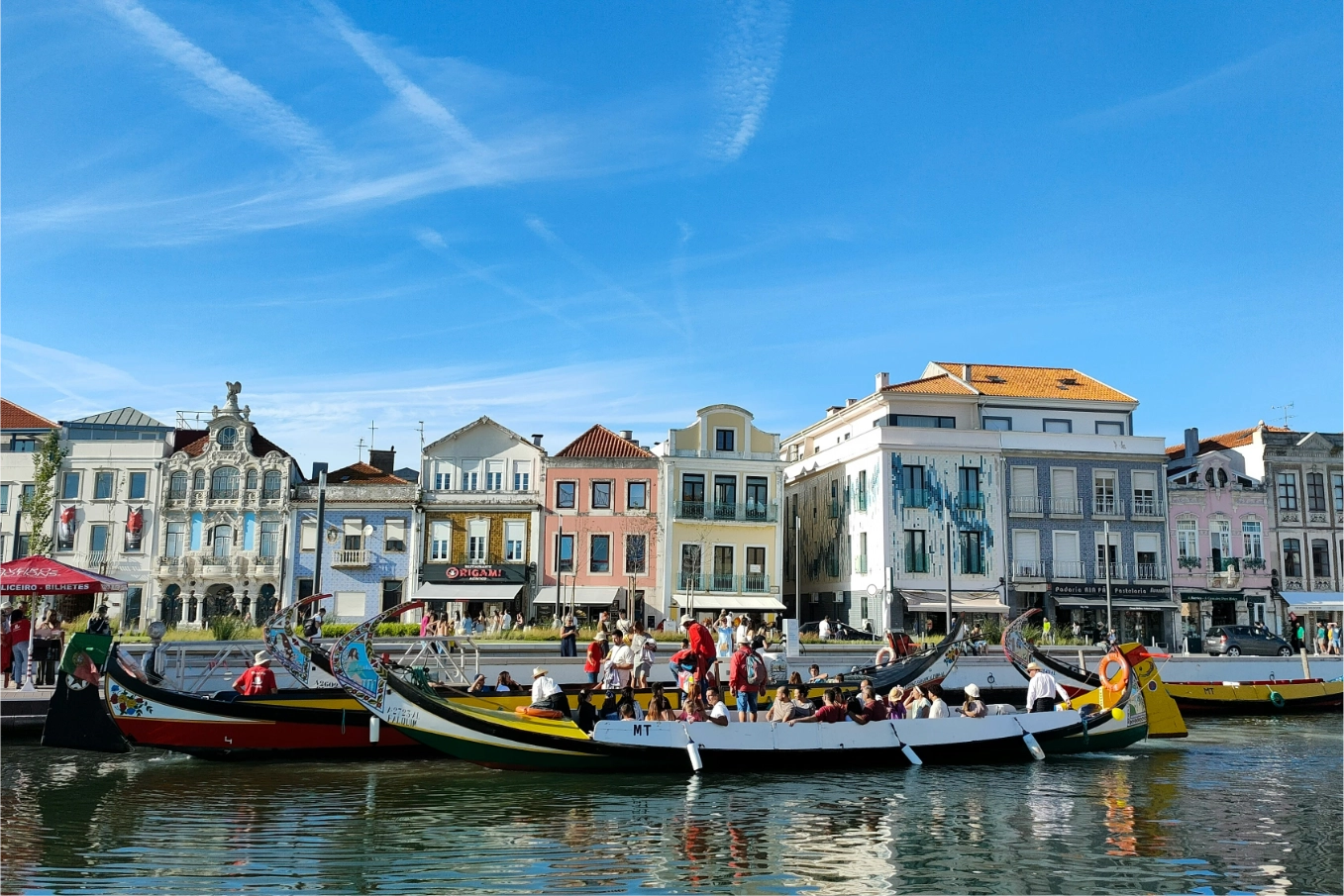
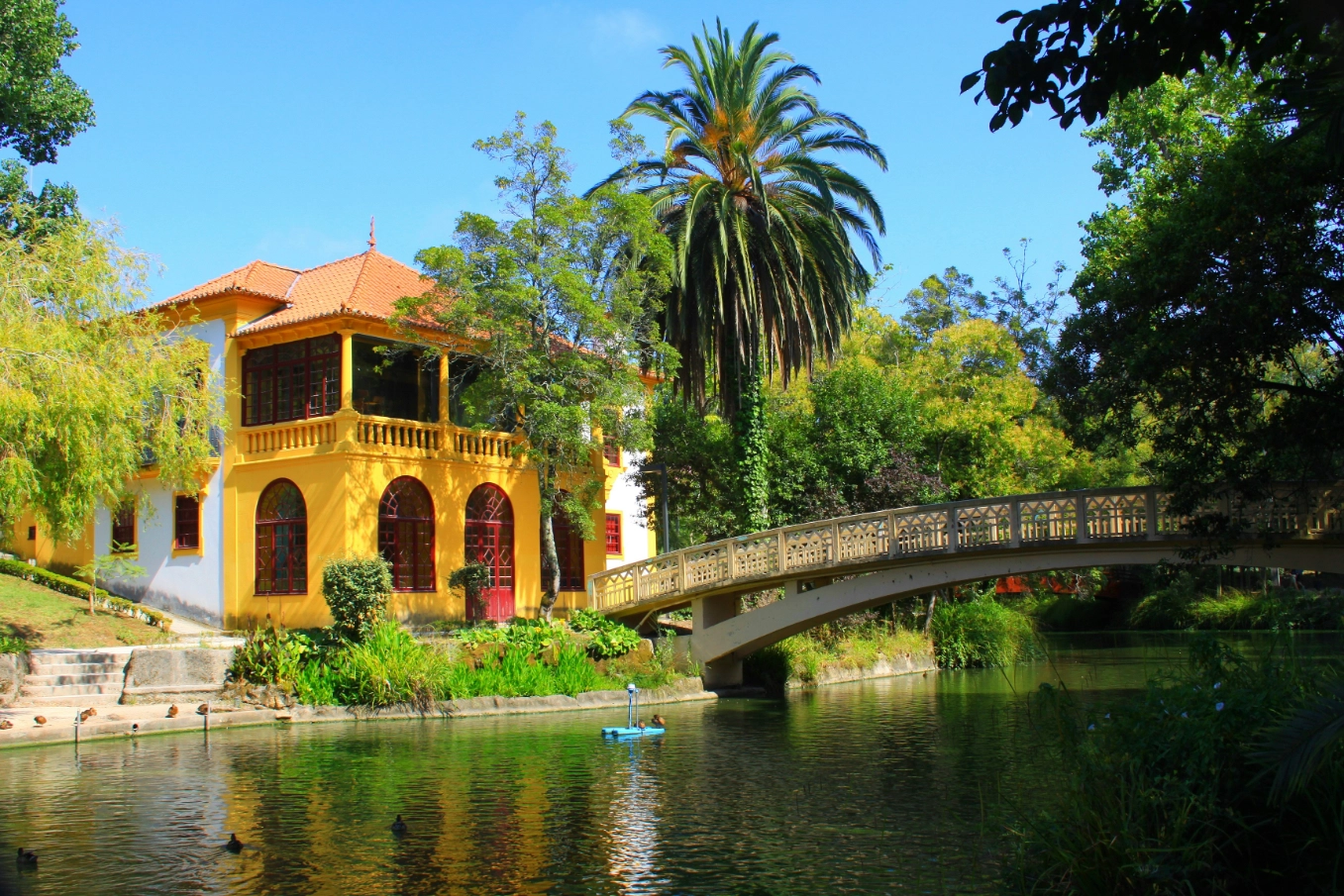
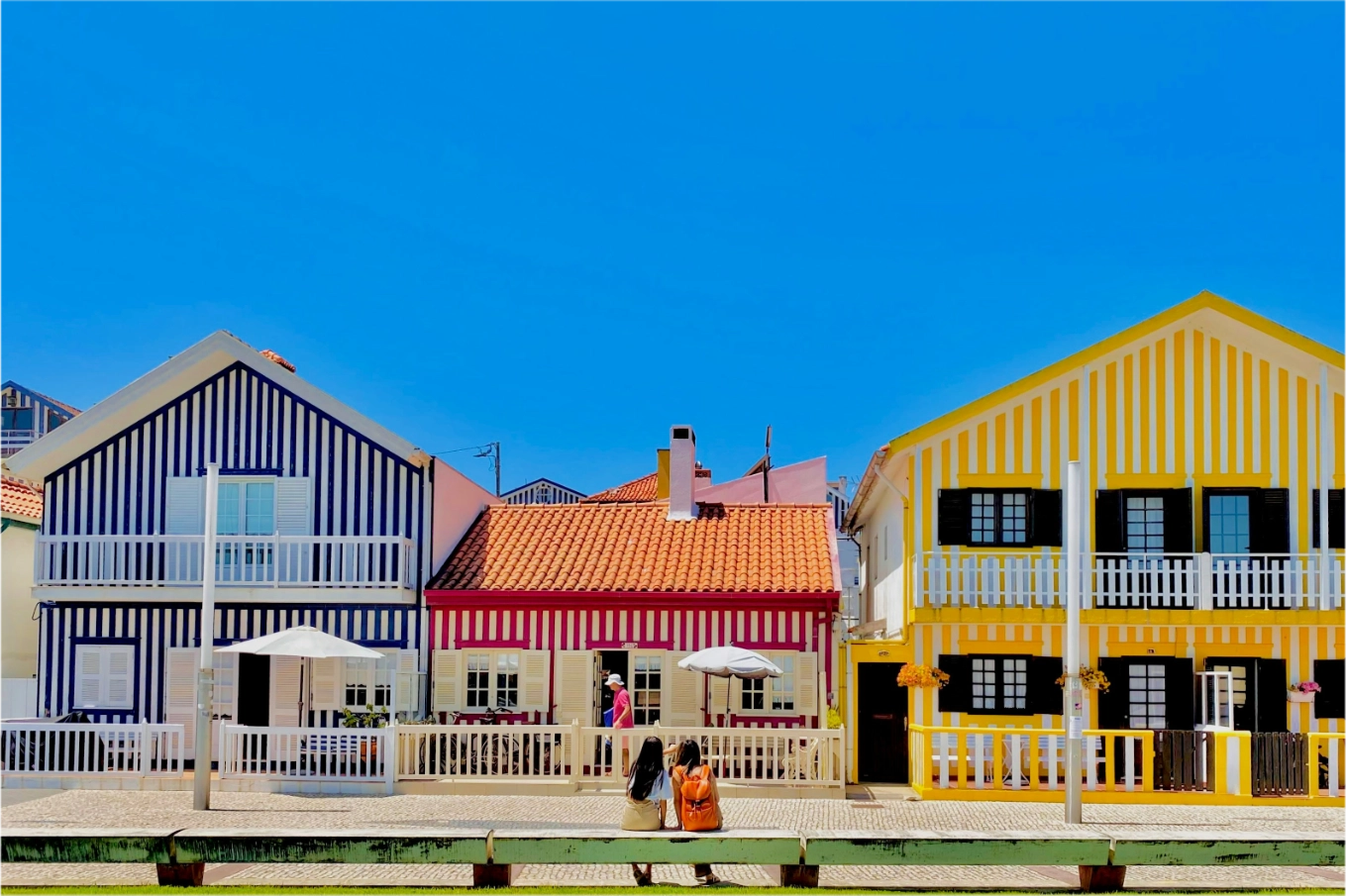
Explore a bela cidade de Aveiro, conhecida como a “Veneza de Portugal”. Com a sua disposição urbana compacta e fácil acesso à natureza e costa, Aveiro oferece um ambiente conveniente e cativante, perfeito para a Escola de Primavera sobre Semicondutores do POEMS.


Esta escola introdutória destina-se a estudantes que se encontram no seu último ano de licenciatura ou primeiro ano de mestrado e que pretendem continuar os seus estudos em áreas relacionadas com semicondutores. Podem-se candidatar estudantes de todas as disciplinas CTEM (Ciências, Tecnologia, Engenharias e Matemáticas) matriculados em universidades da UE ou países associados.
É essencial a proficiência em inglês, pois todas as sessões serão realizadas em inglês.
A seleção será feita através do currículo académico do candidato, carta de motivação e eventual carta de motivação. Estamos empenhados em garantir a diversidade em termos de género, representação geográfica e percurso académico.
Para além disso, a escola também abre candidaturas para estudantes de doutoramento, que pretendam participar, de forma a interagir com os palestrantes e outros estudantes. A seleção será feita considerando a ordem de candidatura, e a diversidade e percurso dos candidatos.
Datas importantes:
Candidaturas de 2 a 20 de fevereiro
Resultados até 2 de março
Registo de 9 a 13 de março
O processo de candidatura será online, através da submissão de:
Currículo
Carta de motivação
Carta de recomendação (opcional)
Não existem pré-requisitos específicos, além de ser um aluno de disciplinas CTEM.
Contudo, estudantes que não tenham familiariedade com conceitos de semicondutores podem beneficiar de rever o material proposto.
Explore os estudos de caso de aplicações de semicondutores nas várias indústrias.

Aveiro é facilmente acessível através do Aeroporto Francisco Sá Carneiro no Porto ou do Aeroporto de Lisboa. É possível chegar ao campus da Universidade de Aveiro de comboio ou autocarro a partir de ambas as cidades.

O alojamento e as refeições durante o workshop serão fornecidos de forma gratuita a todos os participantes, com financiamento do POEMS. Serão atendidas necessidades alimentares especiais, mediante solicitação.
O aeroporto internacional mais próximo é o Aeroporto Francisco Sá Carneiro, no Porto. A partir do Porto, existem várias opções para chegar a Aveiro:
Aveiro tem boas conecções ferroviárias. A estação principal de Aveiro está localizada no centro, podendo chegar a Aveiro de grandes cidades portuguesas como o Porto (estação de Campanhã) e Lisboa (Estações do Oriente e Santa Apolónia).
Aveiro tem um terminal rodoviário com ligação a várias cidades em Portugal. A Rede Expressos é uma grande empresa nacional de autocarros.
A partir da estação de Aveiro, o campus da Universidade é facilmente acessível:


Comissão de coordenação Teresa Monteiro, Ricardo Dias (UA), Ana Silva (INL), Vanessa Moreira Lancha (Ciência Viva), Luis Miguel Pinho (INESC TEC)
Comissão local José Fernando Mendes, João Veloso, Paulo Antunes, Alexandre Carvalho, José Pedro Coutinho, Marta Ferreira, Rosário Correia, Luis Rino, Joaquím Leitão, Joana Rodrigues (UA/Dfis), Pedro Rito, Pedro Cabral (UA/Deti), Pedro Pombo (Fábrica), Rute André (Ciceco, UA/DFIS), João Lourenço Marques (UA/DCSPT)